
Dundy County Criminal Docket Searches
For a Dundy County docket search, the JUSTICE Search gateway is where to begin. It covers both county and district court case information. Accept the terms on the first screen. Then search by a party name. Leave the case subtype alone at first. A guess there can bury the right criminal docket. When a match comes up, check the Dundy County filter, the court level, the case type, the filing year, and the full case number. Do all of that before you open the register. What will you find in each court? Dundy County Court usually carries the misdemeanor, infraction, traffic, and felony preliminary records. Dundy District Court may hold the later felony record. Nebraska case numbers have five parts. They are court level, a two-digit county number, case type, year, and sequence. A full criminal number beats a name match every time. JUSTICE can show case detail, party information, register entries, financial information, judge notes, and document images. Those items appear when they are public and available.
- Open JUSTICE Search, accept the terms, and begin a party-name search for Dundy County.
- Use Dundy County, court type, case type, and year only as needed to narrow a broad result.
- Open the matching criminal case and record its full number and the court that holds it.
- Read the register of actions in date order, then check the current calendar separately for a live setting.
- Contact the Dundy clerk for a public copy, certified copy, paper file, or a missing public image.
Dundy Criminal Docket Court Split
One Dundy felony can leave two criminal docket trails behind it. The preliminary probable-cause stage sits in Dundy County Court. A bind-over sends the matter upward. The felony then proceeds in Dundy District Court under a separate district case number. Keep in mind that a bind-over is a transfer, not a trial result. Read only one side and you can miss half the story. Check both Dundy County criminal docket trails before drawing any conclusion about where things stand.
| Dundy court | Criminal docket role | Search point |
|---|---|---|
| Dundy County Court | Misdemeanors, infractions, traffic, and felony preliminary hearings | JUSTICE with the County Court result and case number |
| Dundy District Court | Felonies after probable cause and bind-over | JUSTICE with the District Court result and linked procedural history |
The County Court jurisdiction statute spells out the misdemeanor, infraction, and related authority that shapes the Dundy County criminal docket path. Read it there to see which court handles which charge.
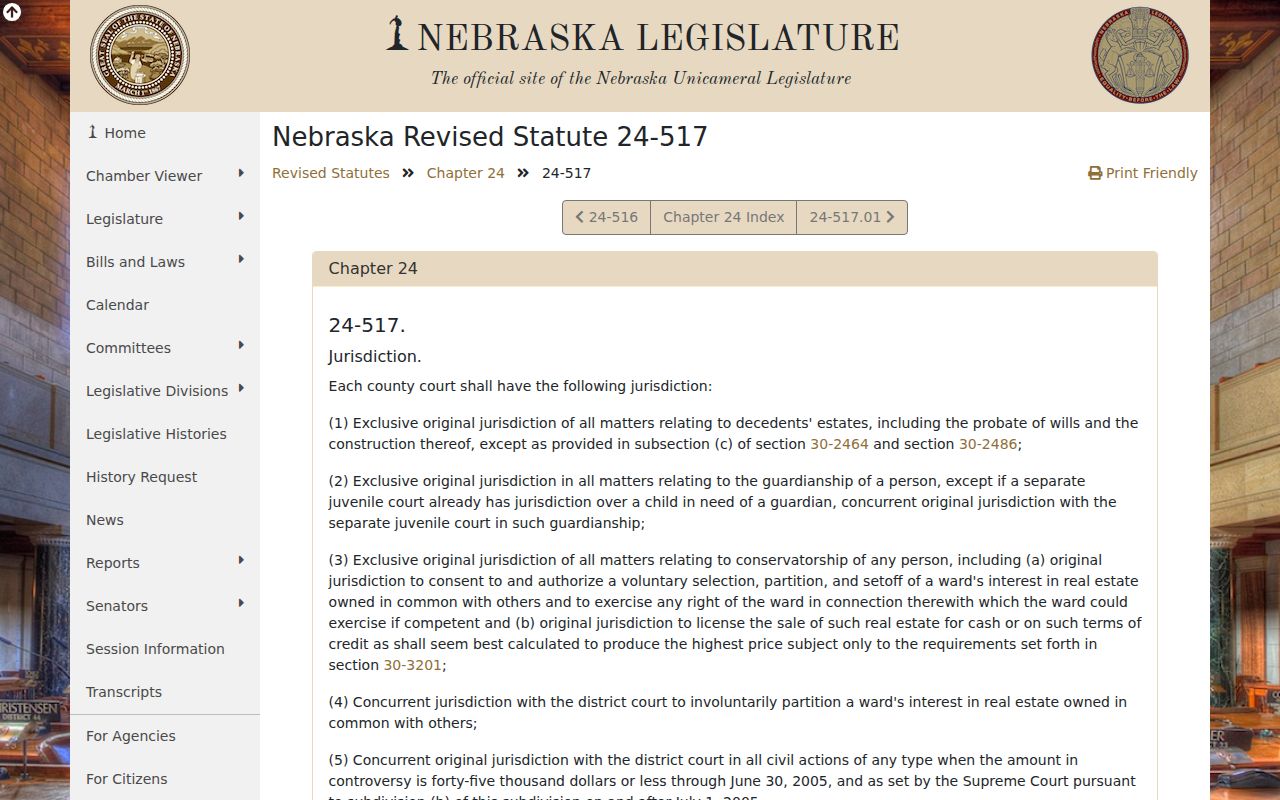
That statutory split is why a Dundy County preliminary record can come first, with a distinct District Court felony record following it.
Criminal Dockets: What They Show
Think of a Dundy County criminal court docket as a chronological register rather than a tidy verdict. Entries may include a complaint or citation, a warrant or bond event, arraignment, plea, motion, preliminary hearing, bind-over, sentencing, costs, probation activity, and closure. The case summary and the register answer different questions. A summary gives you broad fields. The register preserves the event sequence in order. Remember that a filed complaint remains an accusation, and a plea entry is not automatically the final judgment or sentence.
| Case number | The full Nebraska identifier, such as the conceptual pattern C-##-CR-##-#######; retain every part before contacting Dundy County. |
|---|---|
| Case summary | Court, case type, filing date, status, parties, and high-level subject where public. |
| Offense information | Charge or offense data when the case type supports it; it is not a conviction finding. |
| Register of actions | Date-ordered filings, notices, hearings, orders, and other Dundy County court activity. |
| Images and finances | Available public document images and, when available, costs, fines, restitution, payments, or balances. |
Document images generally exist for filings after April 16, 2008, when available at all. An absent image proves nothing about whether a document was filed. A Dundy County clerk can tell you whether a public item is paper-only, not yet imaged, held at the other court level, or restricted.
Dundy Criminal Docket Terms
A Dundy County criminal docket uses short labels. Those labels carry a lot of weight in few words. What follows a request often matters more than the request itself. "Motion filed" is not "motion granted." A warrant label will not explain why it issued. These terms are exactly why you should open the surrounding Dundy County entries. Read any later order too before deciding what happened.
- Preliminary hearing
- An early County Court probable-cause proceeding for a felony, not the trial.
- Bound over
- The felony continues from Dundy County Court to Dundy District Court.
- Nolle prosequi
- A prosecutor’s decision not to continue a charge; it should not be translated as an acquittal without context.
- FTA
- Usually failure to appear. Check the particular Dundy County date, citation, and later event.
Some Dundy County terms deserve a second look. "Information" means a formal prosecutorial charging instrument. A plea of "no contest" or "guilty" describes one stage. Sentencing is a later court action of its own. A deferred sentence or probation entry needs the current order and status. Until then it does not make sense. Read Dundy County criminal docket language entry by entry. Give the latest order and setting the most weight.
Criminal Case Stages on the Docket
Many Dundy County criminal court dockets trace a familiar path. A case can swerve through dismissal, continuance, transfer, plea, or trial. Each stage may land on a different date in the Dundy County register. The calendar does a different job. It shows what is scheduled; the docket records what was entered. A setting sitting in an older Dundy County entry may no longer be current. Treat it that way.
Docket flow: Charge filed › arraignment › pretrial settings › plea or trial › disposition › sentencing.
After a "hearing set" entry, confirm the active date through the Nebraska court calendar service or the Dundy clerk. After "judgment entered," look for later payment, appeal, modification, or satisfaction entries. That habit keeps a historical Dundy County event distinct from the case's current posture.
Dundy Criminal Docket Counts
The FY2025 County Court Caseload Report puts Dundy County's public criminal categories in context. Its reporting period ran from July 1, 2024, through June 30, 2025. Read these as caseload categories. They are not a list of people. They are not case outcomes, and not a count of cases now pending on a Dundy County criminal docket.
The County Court PDF itself carries an awkward header, including "Felony Felony 4" on the second felony column, so open the report directly before building any public graphic that labels that column. The reported Dundy County counts help explain court categories, not the merits of any Dundy County criminal matter.
Dundy County Criminal Docket Courts
Criminal cases in Dundy County split across two court levels, and knowing which one holds your case saves time. The Dundy County Court keeps the local criminal docket for matters that stay at county level. Felonies move up after bind-over. Those land in the Dundy District Court, which holds the felony docket for the county. Both courts work out of the Dundy County Courthouse office. There, Pandora L. Garcia serves as Clerk Magistrate and also as Ex-Officio Clerk of District Court. That dual role explains why a records request may go through a single Dundy County contact even when the docket sits at a specific court level.
For a fuller picture of what County Court handles, the Nebraska County Court overview lays out its role in misdemeanors, traffic matters, and felony preliminary hearings.
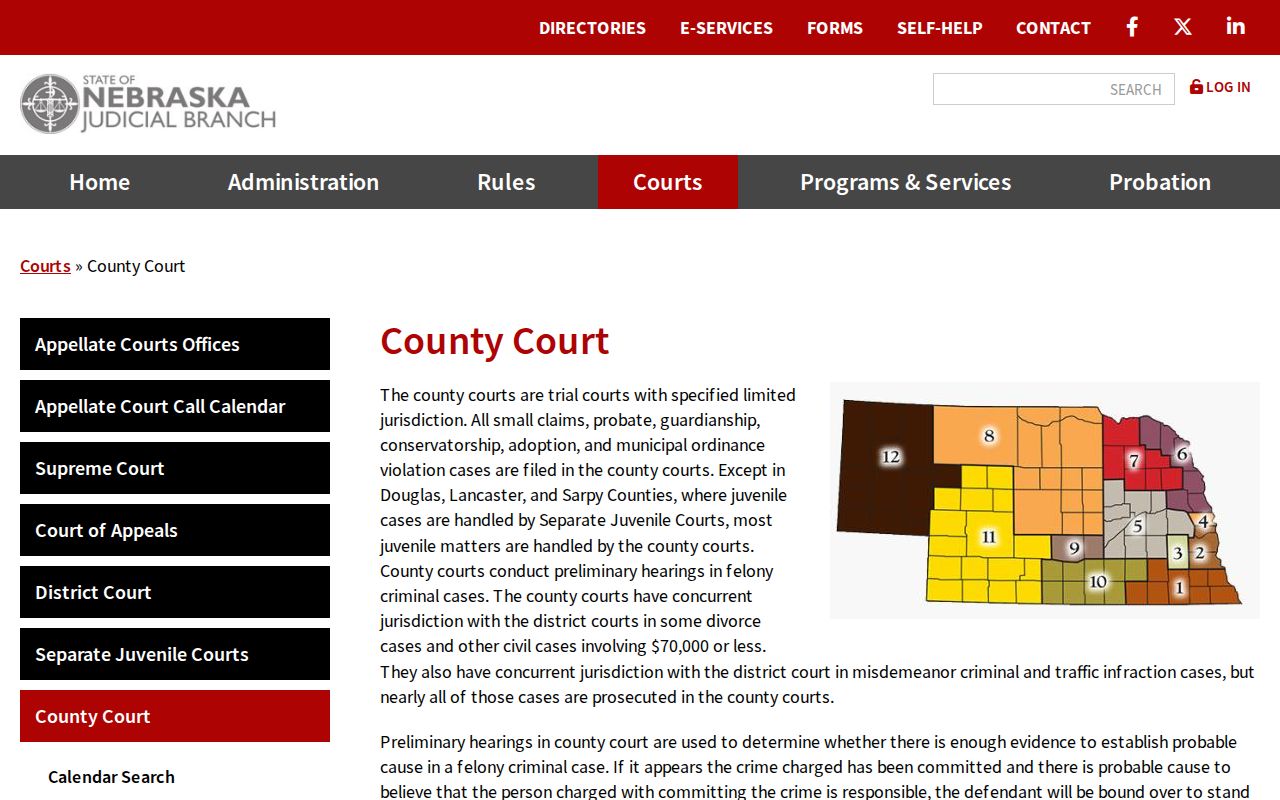
Early criminal work in Dundy County starts in County Court. The county-level Dundy docket is the tool for those stages. Felonies move on to District Court, but the paper trail begins below. The Dundy County clerk's office page lists criminal records and dockets among its duties. That office is the place for a records question. Tell the clerk the court level, the full case number, the party name, the case type, the date range, and the exact item you want. A register, certified copy, transcript, audio request, and ordinary image can each follow its own procedure. Being specific up front saves a trip.
Dundy Criminal Evidence Requests
Dundy County draws a fine line between criminal evidence and the everyday public docket. Defendants with lawyers should let counsel do the asking. Go it alone, and the wait matters. A pro se requester may need to appear in person with photo identification. That access comes only after arraignment and after turning down counsel. Police reports and evidence run $0.25 per page under the FAQ. Treat that rate narrowly, though. It is not a blanket price. It is not a set procedure for every Dundy County court record, certified copy, or public register.
So ask the clerk directly whether the item you want is public, releasable, certified, or restricted. The office sits at PO Box 378, Benkelman, NE 69021. Its public line is (308) 423-2374. A counter visit or public terminal works too. That is handy when a remote JUSTICE search does not fit the job. The court-records policy also points to the State Library and certain law-library terminals for access.
For context on where a Dundy County felony lands after transfer, the Nebraska District Court overview lays out the trial court that handles those cases.
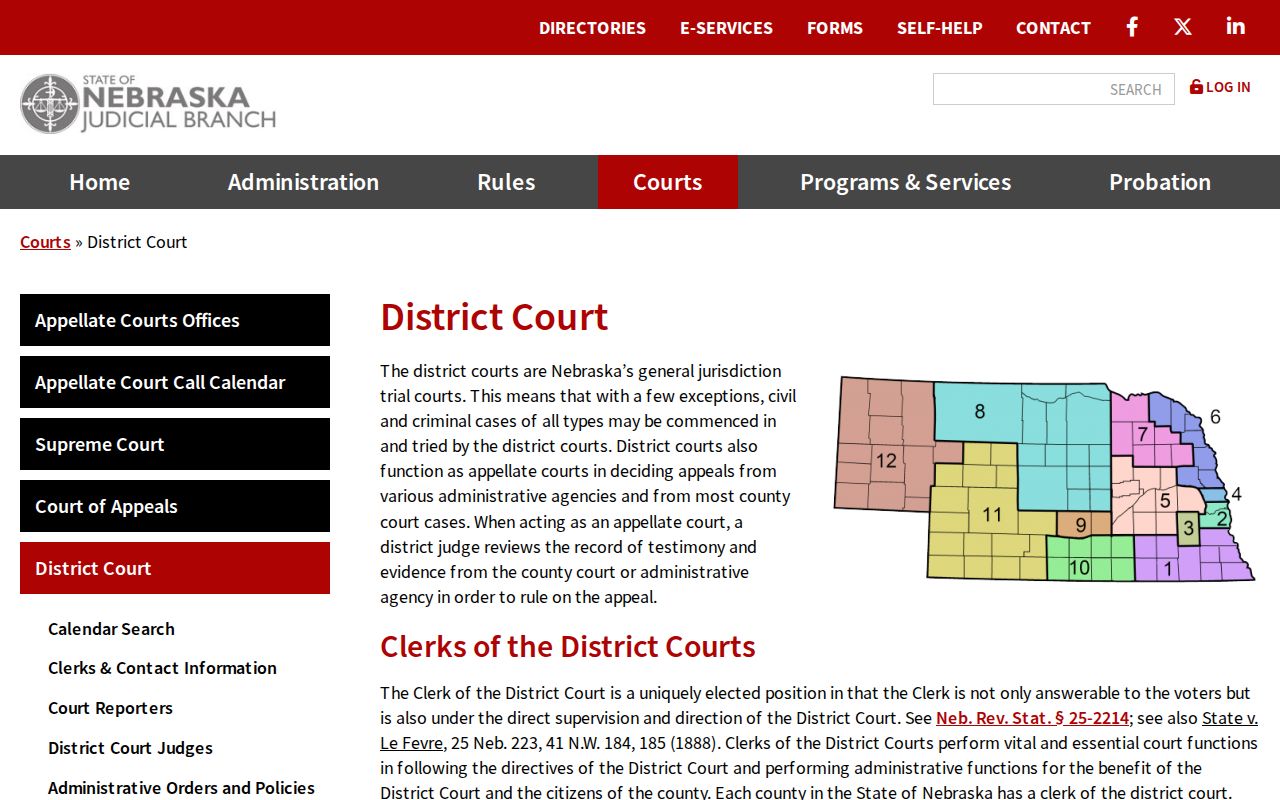
That split matters for anyone pulling a Dundy felony docket. Say up front whether you want the preliminary material or the post-bind-over record, since the request depends on it.
Access Rules for Criminal Dockets
Access to a Dundy County criminal court docket is wide, but it has edges. Nebraska rules open electronic party indexes, summary case information, registers of actions, calendars, and summary orders. An exception can still apply. Viewing is one thing; a certified paper copy is another. A docket search result may show limited metadata. The underlying document image can stay sealed, redacted, or simply unavailable. Juvenile matters, adoptions, sealed adult records, protected personal data, and certain evidentiary or mental-health materials all carry their own limits.
Key rules for Dundy County records:
Neb. Ct. R. § 1-805 makes identified electronic case-information categories public unless restricted.
Neb. Ct. R. § 2-210 requires protection or redaction of covered information and governs many motions to seal.
Neb. Rev. Stat. § 84-712 supplies the general right to inspect and copy public records during ordinary office hours, subject to limits.
A sealed record is not the same as an expunged record. A missing Dundy County search result may reflect sealing, a different court, an old or non-imaged file, or search error. The official sealed-record release form is a restricted-record route for the subject and authorized process, not a public shortcut.
The District Court jurisdiction statute identifies the general trial court that maintains Dundy’s felony dockets after a bind-over.
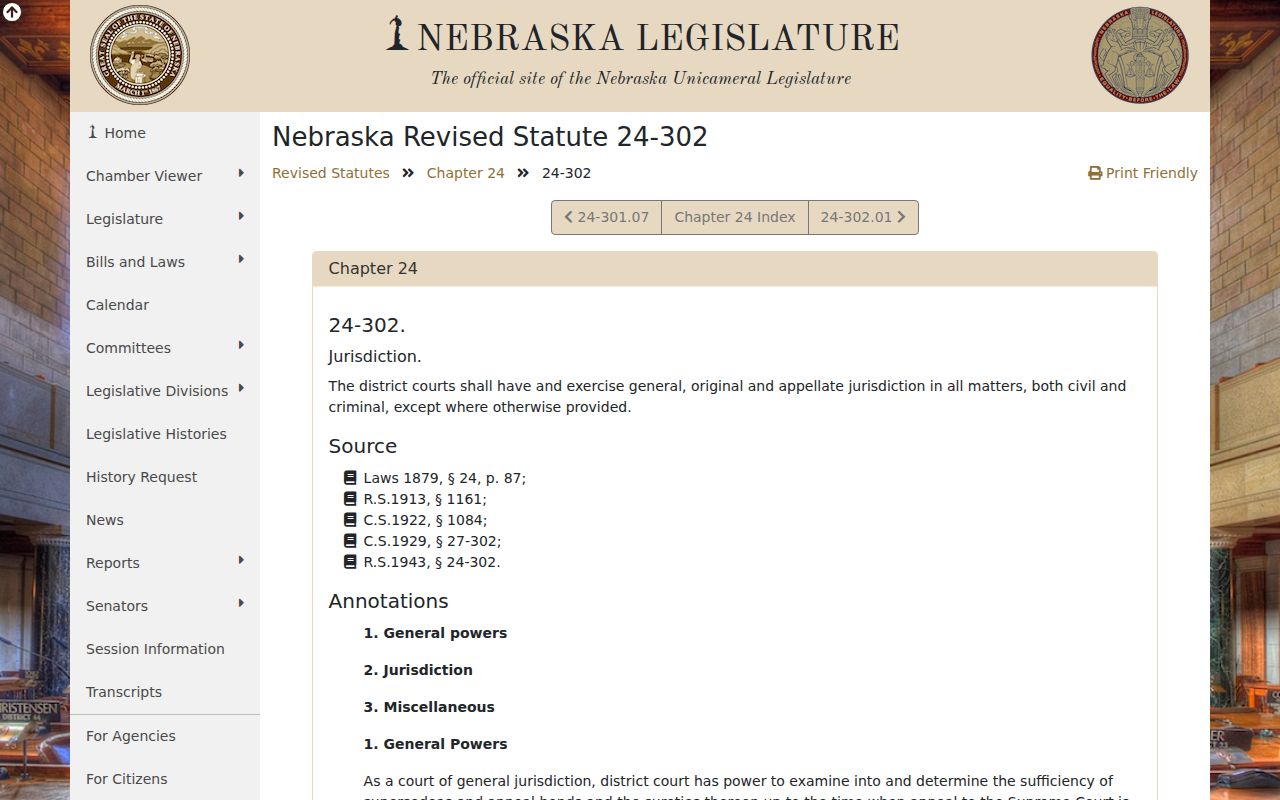
Because that statute splits cases by court level, always name the court level in any Dundy County criminal docket request.
Dundy Criminal Docket Search Limits
JUSTICE puts real limits on a remote Dundy County criminal search. A one-time party-name search runs $17 and covers up to 30 public cases. It stays open for three calendar days. A no-result search still costs the full charge. Fresh Dundy County filings can lag by about 24 hours. An empty result does not rule out a paper file or a very recent filing. Check a current source for prices, since older Nebraska materials list historical amounts.
The courthouse terminal is the cheaper Dundy County option. Regular professional users can turn to Nebraska.Gov subscriber access. E Filing serves authorized filers and is not a public criminal docket search tool. If a time-sensitive Dundy County hearing or travel question remains after searching online, call the clerk. Ask the clerk to confirm the live calendar, the location, and whether attendance is remote or in person.
Save the full Dundy County case number, court level, filing date, and exact entry date before asking the clerk about a public record.