
Traffic Case Records in Dundy County
Traffic cases sit on the Dundy County Court docket no matter who wrote the ticket. The issuing agency might be a city, a village, the county, or the state. It all lands in the same place. Dundy County posts no separate municipal court or justice-of-the-peace docket, so the County Court record is the record. A Benkelman municipal-code page can tell you what local law says, but it is not a case file. The clerk handles those.
Traffic is big business here. The FY2025 Dundy County Court report shows it as the largest single category on the docket, which is why clear routes to citations, settings, and file copies matter so much.
Dundy Traffic Citation and Docket Stops
Nebraska runs three state services that look alike but answer different questions. The citation portal handles the citation and its amount. JUSTICE Search is the stop for a public case summary or register of actions. That applies once a court case exists. Court Calendar Search, or a call to the clerk, gives you the current setting. Nebraska ePayments records a payment transaction or financial entry. It does not by itself establish a case disposition.
| Question | Best Dundy route | What it answers |
|---|---|---|
| What citation was issued? | Citation portal or citation copy | Citation metadata and amount workflow |
| Is there a filed court case? | JUSTICE | Public case summary or register when available |
| What date is scheduled? | Court Calendar Search or clerk | Current public setting snapshot |
| Was money paid? | Nebraska ePayments or JUSTICE detail | Payment transaction or financial entry, not case disposition |
The state citation information and payment interface shows the citation-specific route that comes before any court-record search.
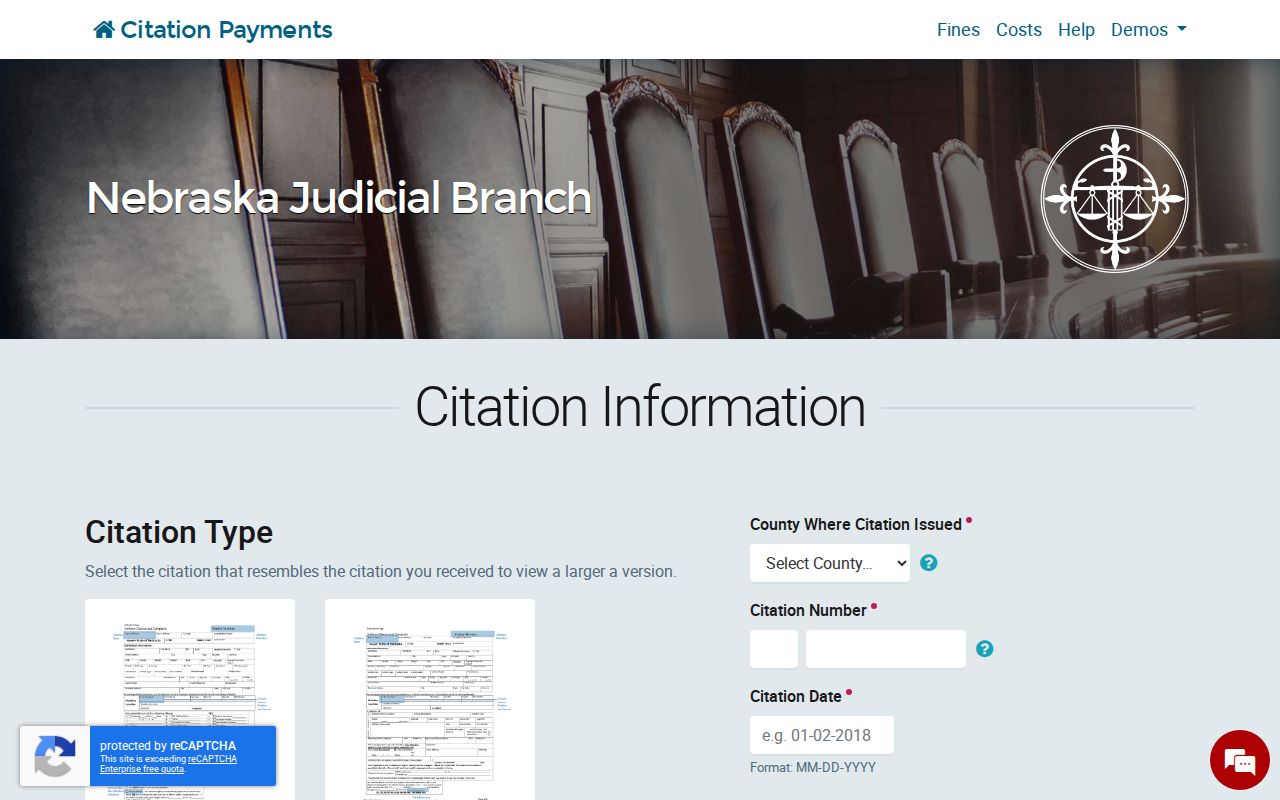
Use the portal to pull citation details first. Then switch to the court system when the question turns to a filed Dundy case, its register, or a hearing.
Dundy County Traffic Ticket Lookups
The citation portal asks for citation type, county, citation number, citation date, person-cited information, and amount. It also requires browser scripting. The interface displays two citation-number inputs. Use the citation itself or the portal's help controls to sort out which applies. County Court Specialists can field questions about county, citation number, and amount.
A ticket is not the only lookup channel. Search JUSTICE by party. Narrow to Dundy County and the likely court or case type if the citation has become a case. The public terminal and the clerk counter work too. Call the clerk when a citation is missing, brand new, or needs converting to the full court case number.
| Portal field | Documented use |
|---|---|
| Citation type | Choose Standard Citation or Electronic Citation. |
| County issued | Select the county where the citation was issued. |
| Citation number and date | Enter the number from the citation and the date in the live portal’s requested format. |
| Person cited and amount | Use the citation’s identifying details and amount workflow when required. |
- Keep the citation copy and record its number, date, issuing county, and type.
- Use the state citation route for the documented citation and amount workflow.
- Use JUSTICE by party and Dundy County to locate a public court case or register, if available.
- Check Court Calendar Search by date or party last name for a current scheduled setting.
- Call or visit the clerk if a number, case link, record image, or setting needs local confirmation.
Dundy Traffic Citation Fields
Nebraska Court Rule § 6-1463 lays out the Uniform Citation and Complaint. It is electronically generated in ordinary practice. The ticket can carry identifying and address information, language need, date of birth, the offense, and offense date. It may also list time and location, an appearance time and place, a promise to appear, and a failure-to-appear warning. Those details identify the citation. Do not publish personal information from a ticket.
The rule also sets the numbering. A consecutive citation number has up to two alphabetic characters followed by up to seven numerals, with no leading zeros. Copy the number exactly as printed. The court case number is a separate identifier. It comes from JUSTICE or the clerk.
The Uniform Citation and Complaint rule supplies the field and numbering framework for Dundy County traffic citations.
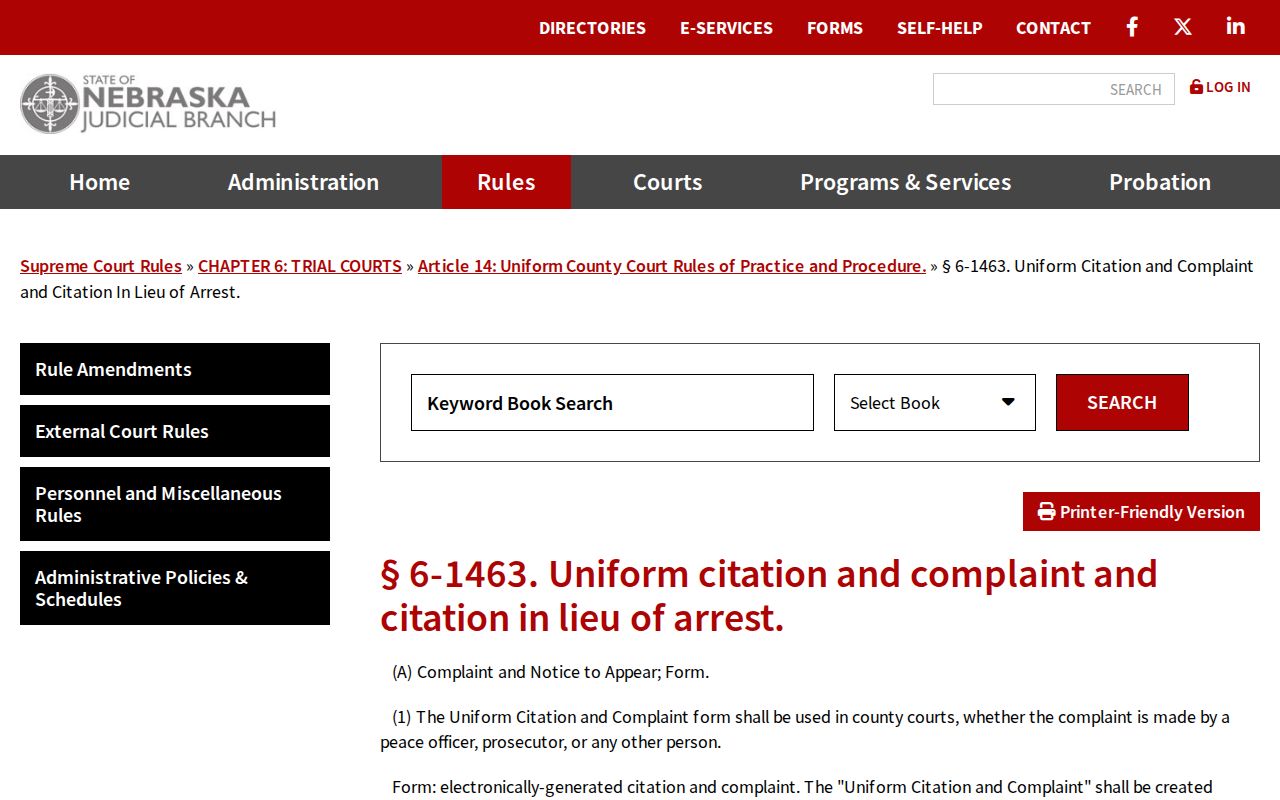
Keep the date, citation number, and court case number as separate details. That habit cuts the risk of searching the wrong source.
Traffic Court Dates in Dundy County
A citation date is not necessarily a court date. The citation states an appearance time and place. The public calendar is a schedule snapshot that can change. Search the calendar by date or by party last name. Write down the court level, case number, date, time, judge if displayed, and location. A later continuance or cancellation can overtake an earlier docket entry. So check before you drive.
| Citation number | Rule-based form may be AA1234567; copy the issued number exactly and do not add leading zeros. |
|---|---|
| Court case number | Separate Nebraska court identifier; obtain it from JUSTICE or the clerk when the citation alone is not enough. |
| Calendar date and time | Current setting found by date or party last name, then verified when travel or attendance matters. |
| Location and court level | Confirm the County Court setting and any courtroom, remote, or access instruction with the clerk. |
| Register status | Read the newest entry and later order for a continuance, vacatur, or new setting. |
The Nebraska citation statute is part of the legal framework for a citation in lieu of arrest. It is not a substitute for checking the current court calendar.
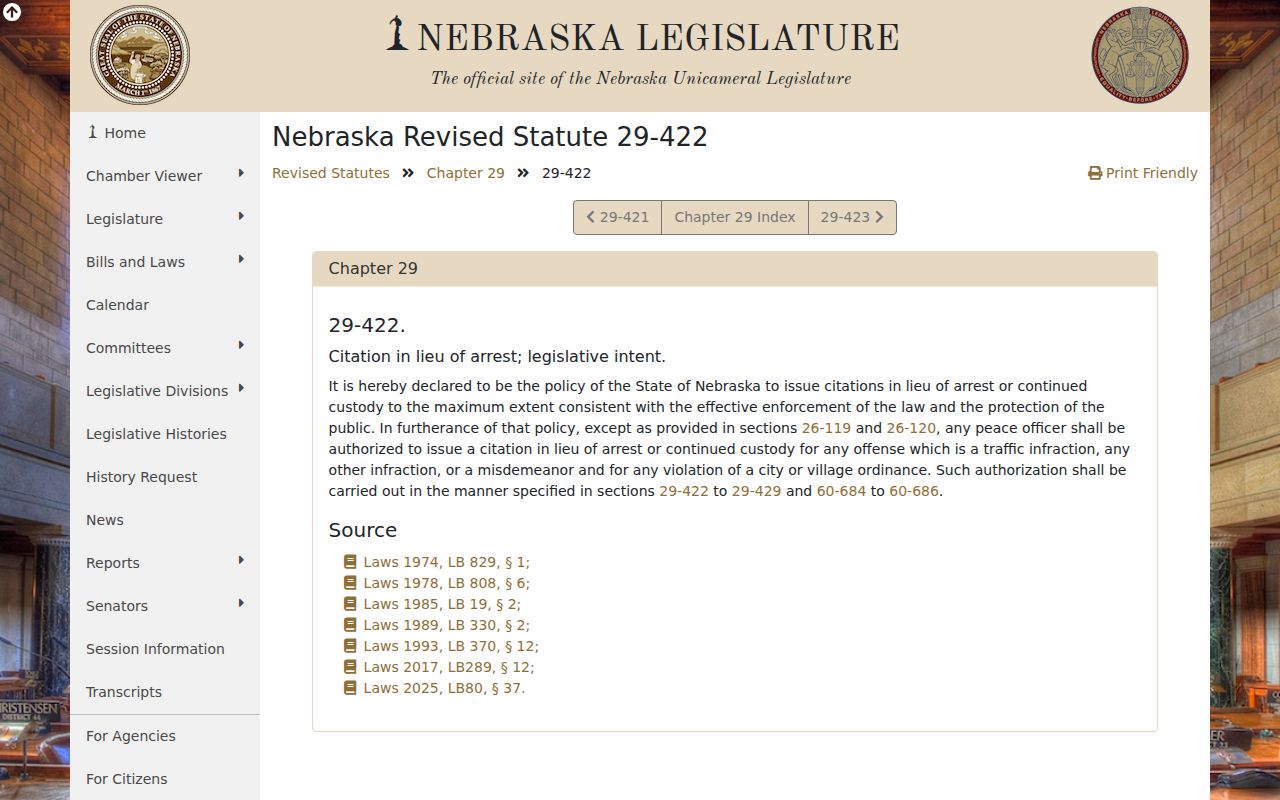
Call the Dundy clerk at (308) 423-2374 when the calendar conflicts with a notice, a result is missing, or a hearing matters for travel.
Dundy Traffic Calendar Date Distinction
A calendar answers what is scheduled now. A register answers what has been entered in the case. A citation preserves the information issued at the enforcement event. The three can show different dates without any conflict between them, because a hearing may be continued or vacated after a calendar is generated while the register keeps the older setting as history.
For a Dundy traffic setting, verify the current date before travel. The state calendar source supports date and party-last-name searches, but its live fields and historical availability can change. The clerk is the local confirmation point for a conflicting notice, a current location question, or a change in appearance instructions.
Ask what kind of setting it is. Arraignment, plea, pretrial, sentencing, or review are not the same thing. A docket label alone may not show the full current calendar context.
Paying a Ticket vs Fighting It
Paying and fighting are different routes. Nebraska ePayments takes a case number, while the citation portal handles citation and amount information. Dundy does not publish one online process for every response, so read the citation and contact the clerk for current instructions.
| Payment route | Contest or court-response route |
|---|---|
| Use Nebraska ePayments when the payment service accepts the court case information. | Use the citation’s instructions and the Dundy clerk for the current court-response process. |
| Keep the payment confirmation and review the court financial entry when available. | Keep the citation, case number, and current setting when contacting the court. |
| A transaction can show payment information; it does not alone establish the final court disposition. | A court response may require a current setting or filing route that the payment screen does not supply. |
Failure to appear needs prompt case-specific confirmation. Nebraska's traffic statute range includes failure-to-appear consequences in § 29-426. The clerk does not publish a current Dundy license-hold or collection workflow, so rely on the citation notice or the clerk for the applicable instruction rather than assuming a particular outcome.
The Nebraska traffic statute range places the failure-to-appear provision in the broader citation framework.
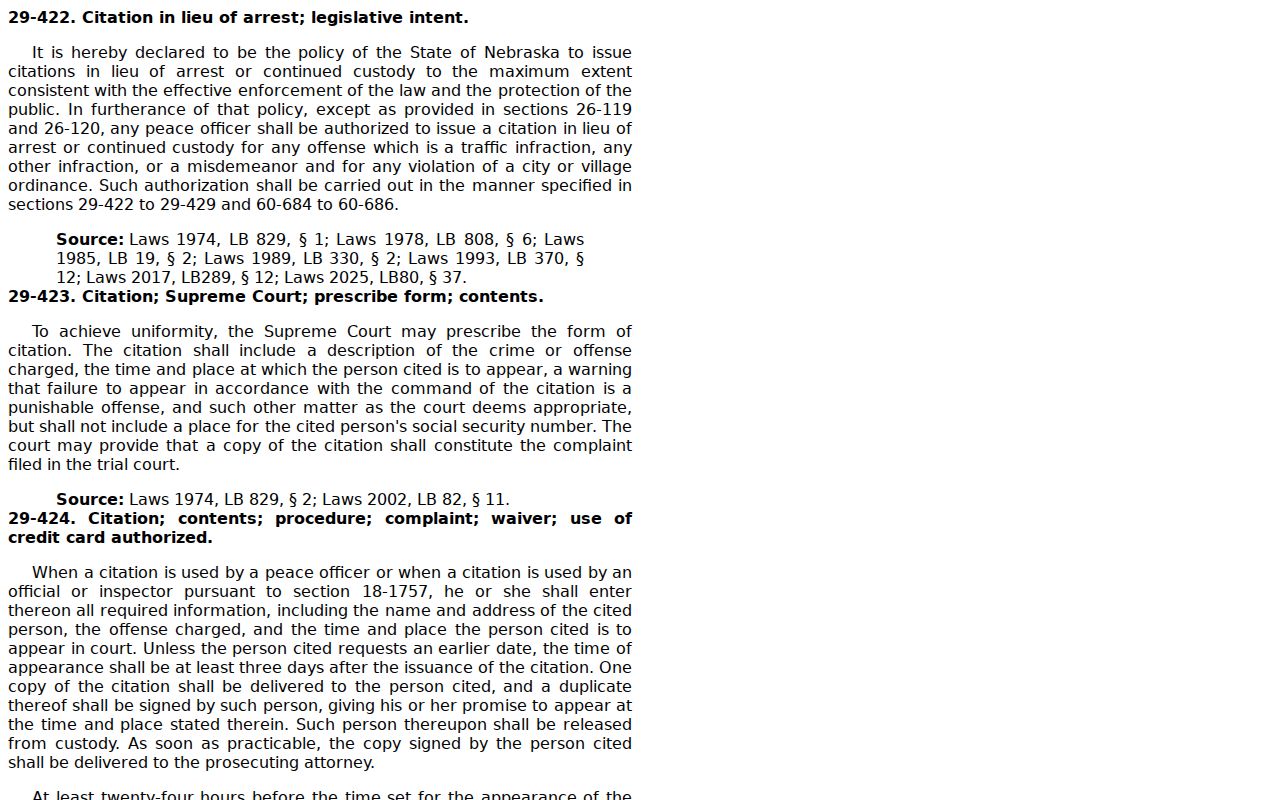
The statute ties the issue to the court case itself. It sets no single local Dundy penalty that applies to every citation.
Dundy Traffic Payment Is Not Disposition
Paying a ticket is not the same thing as seeing what the court entered. A receipt or payment page tells you money moved. It does not replace the register of actions. Nebraska ePayments routes you by case number. You pick county or district selection plus case type, year, and number. In JUSTICE, cost and payment detail can sit beside the case history. For what the judge actually ordered after payment, the register and later orders are the stronger court record.
The one-time court payment form shows that separate case-number payment path.
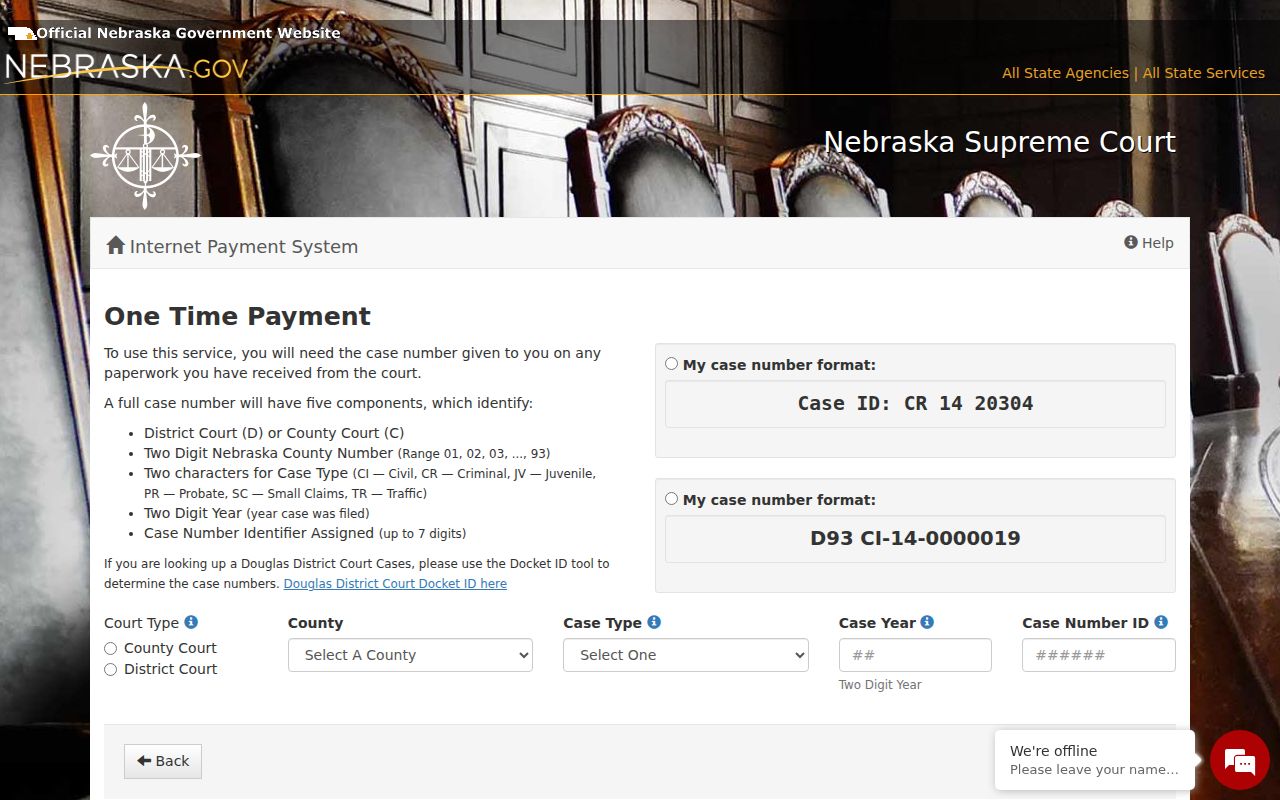
If an amount or a result looks unclear, keep the full case number handy. Then ask the clerk how to get the public register or the right financial record.
Two Records: Court File and Driver File
A Dundy traffic court record and a state driving record are two separate files. Each has its own keeper. The County Court file sits with the local clerk. It can show the citation, case activity, court dates, orders, and public financial entries. A driving record is a different animal. The Nebraska state licensing agency holds that one, not the clerk. It publishes its own request steps.
| File | Custodian | Use this source for |
|---|---|---|
| Dundy traffic court file | Dundy County Court clerk | Citation-related court case, register, setting, orders, and releasable copies |
| State driving record | Nebraska state licensing agency | The separate state file, through its official state process |
Pulling one file does not answer for the other. A docket search at the courthouse is no substitute for a driving-record request, and the reverse holds too.
Dundy Traffic Court Is County Court
Dundy County Court is where traffic matters actually get heard. It handles misdemeanors, infractions, municipal ordinances, and felony preliminary hearings along with traffic tickets. That matters when a citation names a local issuing agency. It also matters when the stop happened in Benkelman or Haigler. The issuing town does not create its own municipal docket. The case lands in Dundy County Court. Before requesting a record or checking a court date, nail down the court and the case number.
The clerk's channels, JUSTICE, the state calendar, and the citation payment services each serve a distinct purpose. A local code supplies legal text. The Dundy County Court register supplies the procedural record.
Traffic Record Copy Fees
Requesting a Dundy traffic record copy? Give the clerk the court level, the full case number if you have it, the citation number and date, the item you want, and whether it should be plain or certified. Unsure how a citation number becomes a case number? Ask. The Nebraska schedule sets photocopies at 25 cents per page. Certificates, seals, filing fees, and court costs appear on separate lines, and no single fee covers every register, certification, mailing, scan, or audio request.
| Item | Published fee | Practical note |
|---|---|---|
| Photocopy | $0.25 per page | Listed on the current Nebraska court schedule. |
| Plain traffic register or document | Ask clerk | Availability and record format control the request. |
| Certified traffic copy | Ask clerk | Certification or seal charges are separate schedule items. |
| Citation-to-case number help | Ask portal or clerk | Needed when the citation does not provide the full court identifier. |
Check the Nebraska filing fees and court costs schedule for current fees.
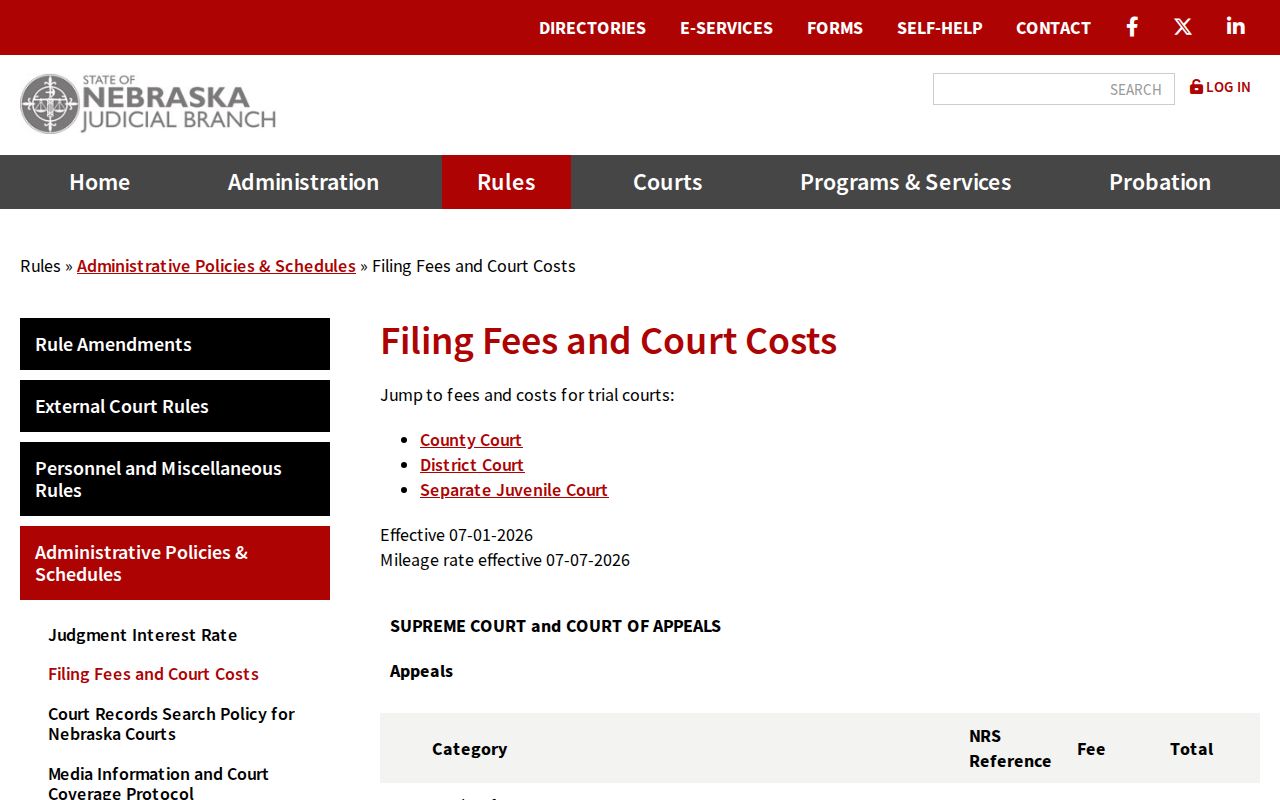
Call the Dundy clerk at (308) 423-2374 before sending a copy request. That matters when certification, format, availability, or delivery could change what you ask for.
Dundy Traffic Record Copy Checklist
A tight Dundy traffic record request names Dundy County Court, the full case number when known, the citation number and date, the exact item, and whether you want plain or certified copies. Ask for the register, citation, judgment, or payment history by name. Have only a citation number? Ask the portal or the clerk to locate the separate court case number.
One caution. A record request pulls an existing court file. It does not create a new case summary or fetch a different state record.